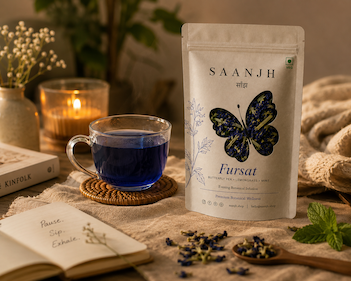
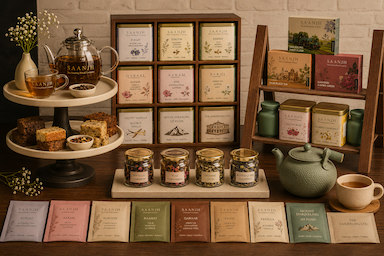
Saanjh’s workplace wellness proposition begins with a decision about the tea break: to make the pause as important as the drink.
The brand is developing botanical blends, workplace pantry collections and guided tasting experiences around an everyday ritual. Its premise is straightforward. A wellbeing practice may be easier to introduce when it fits into something people already do.
For Saanjh, the evening tea break provides that starting point. Preparing a cup, stepping away from a task and paying attention to the experience become the elements of a deliberate transition within the working day.
The approach places familiarity at the centre of the business. Tea supplies the product; the ritual gives the workplace proposition its shape.
Making workplace wellness part of an existing routine
Saanjh’s developing workplace offering has several components. A curated pantry collection would make botanical blends available in the office. An employee subscription model proposes monthly replenishment and rotating selections. Founder-led tastings introduce participants to ingredients and the rituals associated with preparing and drinking them.
These components address different practical needs. Pantry access concerns availability. Replenishment concerns continuity. A tasting creates an introduction to an unfamiliar blend and an opportunity to experience it before choosing it again.
The distinction matters because introducing a product and establishing a habit are different tasks. An office can stock tea without creating space for a break. Saanjh’s proposition depends on bringing those two elements together: access to a drink and a reason to pause.
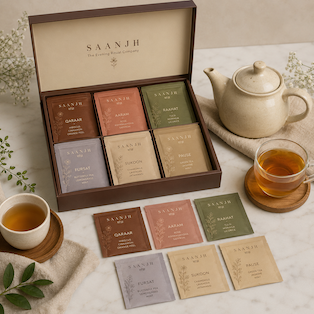
Its gift boxes extend the same idea into client and festive gifting. Within the workplace offering, however, the more substantial ambition is repeat participation in ordinary working life.
Botanical blends with a distinct identity
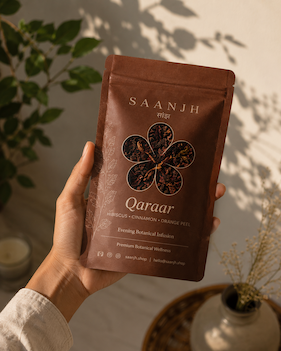
The brand’s public collection connects named blends with different moments of the day. Qaraar combines hibiscus, rose petals, orange peel and fennel. Fursat brings together lemongrass, mint and butterfly pea. Sukoon includes chamomile, lavender and ashwagandha. The range gives Saanjh a vocabulary for presenting tea through occasions and routines as well as ingredients.
That identity is also visible in the product presentation: individually named packs, botanical motifs and coordinated tasting selections. The packaging gives each blend a recognisable place within the collection.
For a workplace tasting, this provides material for conversation about flavour, preparation and personal preference. The experience can begin with something concrete rather than an abstract instruction to practise wellbeing.
The intended contribution remains practical: making room for a short, deliberate pause. The workplace model does not depend on treating tea as a medical intervention.
From tasting to a repeatable offering
Saanjh’s initial development has included product testing, tasting experiences, customer feedback and pre-orders. Early tastings introduced butterfly pea, rose-hibiscus and chamomile.
The next stage involves translating that introductory experience into a workplace offering that people choose to use repeatedly. The brand is developing corporate partnerships, pantry programmes, employee subscriptions and facilitated ritual experiences as possible routes.
Each route requires a different kind of engagement. A tasting is a discrete event. A pantry programme relies on continued access and use. A subscription requires a recurring decision to replenish. Together, they outline a business moving from individual product encounters towards a more sustained relationship with workplaces.
Participation, repeat engagement, tasting attendance and subscription retention are among the indicators identified for future evaluation. These would help establish how the offering fits into working routines and which elements employees return to.
Giving the pause a place
Saanjh’s most distinctive choice is to build around an existing habit. The brand is seeking a place within the working day through a familiar action that can be repeated without elaborate preparation.
Its development will depend on how that idea works in practice: whether employees enjoy the blends, whether the experience remains accessible and whether organisations make room for the break itself.
A stocked pantry can make tea available. A workplace culture that allows people to step away gives the ritual somewhere to happen. Saanjh’s opportunity lies in connecting the two.