

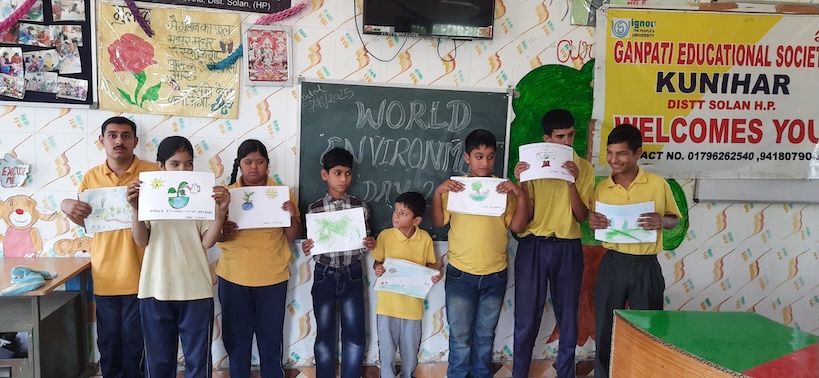
For a child who cannot travel to school, an educational opportunity depends on more than a place in a classroom. Distance, mobility, family circumstances and the availability of support all shape whether learning can happen at all.
Ganpati Educational Society’s response brings together two approaches: a centre where children can learn and take part in shared activities, and visits to homes where travel remains a barrier. Based in Kunihar, in Himachal Pradesh’s Solan district, the organisation works across the relationship between a person with disabilities, their family and the wider community.
Established in two thousand and three, the society began its dedicated disability work two years later. Its services now include the Disha-Cum-Vikas Day Care Centre, home-based education and therapeutic support. The National Trust lists it among registered organisations participating in the Disha, Vikaas and Sahyogi schemes.
Disability inclusion in rural Himachal Pradesh begins with access
The organisation’s beginnings grew from its members’ experience of rural life. Several had encountered difficulties in their own education and had taken part in social activities while at college. Their subsequent work brought them into contact with families facing overlapping barriers around disability, health and schooling.
Reaching those families required patience. Parents needed opportunities to discuss their children’s circumstances, explain the difficulties of everyday care and build confidence in unfamiliar services. Conversations with families became an entry point for education, therapy and participation beyond the home.
This remains central to the society’s approach. Its work addresses three connected groups: people with disabilities, their parents or carers, and the communities around them.
The connection matters. An educational activity can create an opportunity, but a child also needs the practical support to attend and the freedom to participate. Family engagement and community acceptance therefore sit alongside teaching in the organisation’s work.
A daily routine with room for different abilities
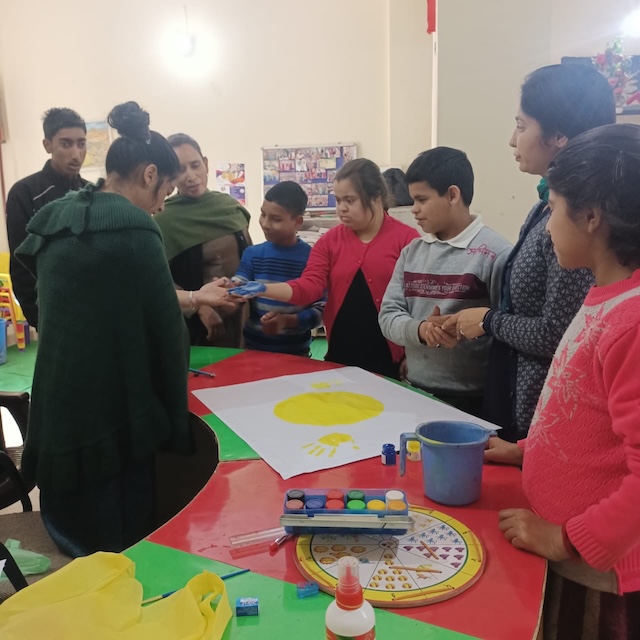
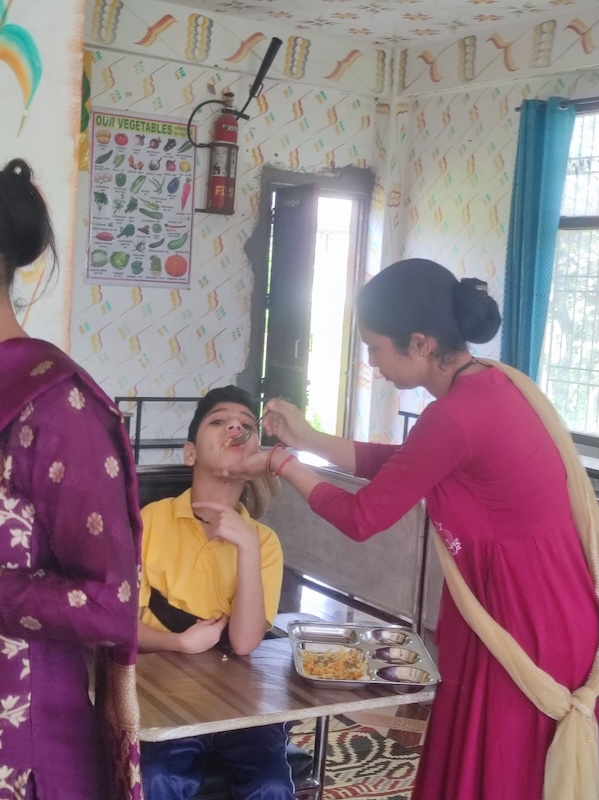
At the day care centre, academic learning forms part of a broader routine. Music, cultural activities, sport, daily living skills and meals provide different ways for children to engage.
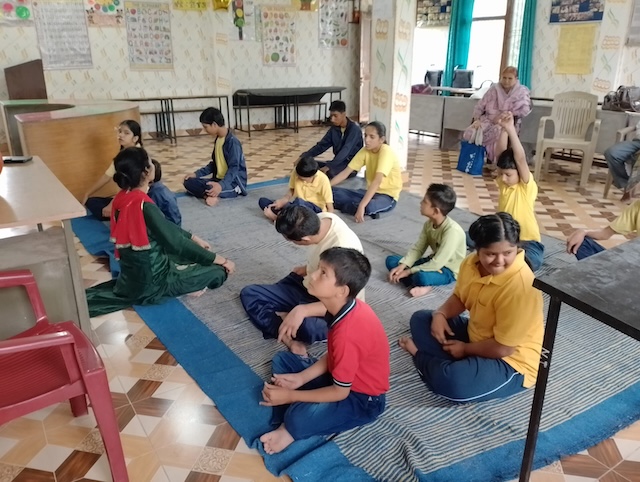
A typical day lasts four to five hours for around twenty-five children. Activities are adapted to individual abilities and include lessons, movement, yoga and breathing exercises.
The significance lies in the range of opportunities available. Learning can involve practising a practical task, joining a group activity or finding a way to communicate a preference. These are different forms of participation, each requiring attention to the individual.
The society’s programme includes individual educational plans, teaching aids, parental counselling and access to therapeutic services. Together, these establish a structure in which education can respond to a child’s circumstances rather than depend on a single method of instruction.
Bringing support into the home
For children unable to reach a centre, home visits offer another route to learning and support.
The organisation’s home-based work includes time with children, activities suited to their interests and therapeutic input according to need. Parents and carers are part of that setting, allowing attention to the circumstances in which a child lives.
This approach recognises a practical limitation of services delivered entirely from one building: their availability does not guarantee that everyone can reach them.
Centre-based activities and home visits serve different needs. Together, they allow the society to work with children whose opportunities would otherwise depend heavily on their ability to travel.
Practical skills and public participation
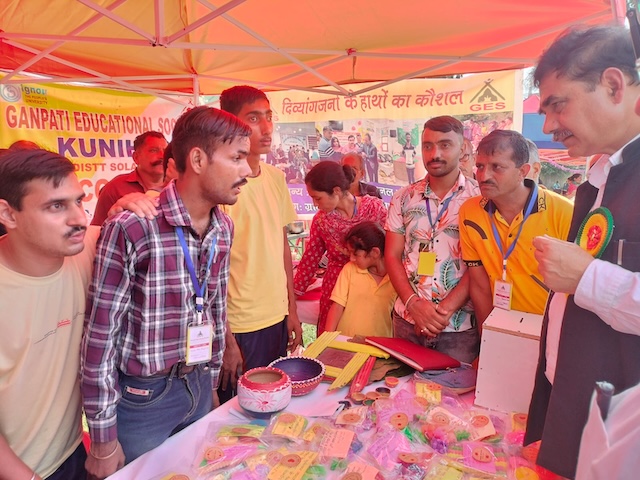
The organisation’s work also extends into practical learning. Its vocational activities include candle making, paper products, painting, stitching and other tasks using locally available materials.
Such activities create opportunities to practise a sequence of tasks and produce something tangible. Exhibitions and community events add another dimension by bringing that work into public view.
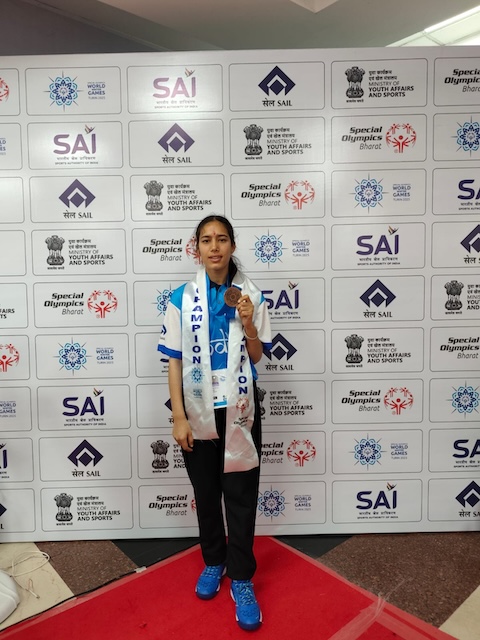
Sport provides a further avenue. Athletes associated with the society have participated in international Special Olympics events, including the World Summer Games in two thousand and twenty-three and the World Winter Games two years later.
International participation is a visible achievement within a much broader programme. The everyday work includes making room for people to join activities, develop interests and take part in community life over time.
Learning beyond the centre
The centre also offers opportunities for future educators to encounter disability education in practice.
In May two thousand and twenty-six, trainee teachers from an education institute in Arki visited Disha Vikas Centre. They met children, explored their educational needs and took an interest in materials the children had made. Director Dr Roshan Lal Sharma discussed the centre’s work with the visitors.
The visit illustrates how a local service can become a setting for wider learning. Understanding individual needs is relevant both to those delivering specialist support and to educators preparing to work in other classrooms.
Ganpati Educational Society’s approach connects these settings: the home, the centre and the community. Each has a role in determining whether an opportunity becomes usable.
Its continuing task is to sustain those connections so that learning, care and participation remain accessible across different circumstances. For the people involved, inclusion takes shape through those practical arrangements, repeated day after day.