

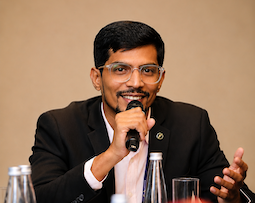
A candidate waiting for an update is already encountering an organisation’s culture. Before there is an offer, a contract or an induction, a recruiter’s response can give that person a reason to trust the people behind the vacancy. For Mohsin Shaikh, this is where the responsibility of talent acquisition begins.
Shaikh, Global TA Manager at EnterpriseDB Software in India, places clarity and respect at the centre of his approach to recruitment. His concern extends beyond whether a position is filled. It includes what candidates understand about the process, whether commitments are kept and how a decision reaches the person whose next career move may depend on it.
That perspective brings a practical dimension to workplace values. A promise of openness has little meaning to someone who cannot establish what happens next. An organisation’s first conversations with prospective employees can make its stated principles tangible, or leave them difficult to recognise.
The responsibility behind a timely update
Shaikh’s attention to culture developed through ordinary recruitment interactions: response times, explanations of expectations, the conduct of interviews and the communication of decisions. These are the details he considers consequential because they form a candidate’s early understanding of an employer.
His starting point is the uncertainty on the other side of the conversation. Candidates may be considering several opportunities while trying to understand a role and the team around it. Unclear timelines or mismatched expectations can complicate that decision, even when the opportunity itself remains attractive.
The practices he advocates are specific: explain the process early, prepare candidates for interviews, keep communication timely and bring conversations to a clear conclusion. In working with hiring teams, he aims to make responsibilities and next steps easier to understand. The emphasis is on ownership of the interaction, including when the answer is disappointing.
An update need not contain a final decision to serve a purpose. In Shaikh’s approach, following up when there is no immediate news is still a way of recognising the time a candidate has invested. It makes communication part of the work rather than something deferred until a vacancy has been resolved.
Values expressed through decisions
Shaikh gives respect, fairness, transparency and accountability distinct practical meanings. Respect recognises a candidate’s effort. Fairness requires relevant criteria to be applied consistently. Transparency involves honesty about the role, expectations and decisions. Accountability places responsibility on the people managing the conversation to keep it moving.
These principles also require cooperation. A recruiter can explain the process, but hiring managers shape the experience through their preparation, decisions and willingness to make room for candidates’ concerns. Shaikh points to the value of a manager taking time to explain a decision and a team treating a candidate’s contribution with attention.
The distinction matters for leaders who regard recruitment chiefly as a route to staffing a team. Shaikh’s perspective gives the process a wider responsibility: it is also an opportunity to demonstrate how colleagues handle uncertainty and how seriously they take commitments to another person.
Looking beyond a completed vacancy
Shaikh favours assessing the experience through several kinds of evidence. Surveys have a place, alongside direct feedback and observable behaviour. The indicators he considers useful include whether updates arrive as promised, whether hiring teams follow an agreed process and whether decisions are communicated respectfully.
He also looks towards the relationship that follows a decision: a candidate’s willingness to engage again and a new employee’s understanding of the role and team. These are areas he believes deserve attention when evaluating recruitment. They broaden the enquiry beyond activity counts without turning every interaction into a claim of success.
His ambition is a consistent experience over time. One considerate conversation can matter to the person involved; maintaining that standard across repeated interactions requires recruiters and hiring managers to keep returning to the same responsibilities. For Shaikh, a difficult outcome still leaves room for an honest and professional exchange.
A GreenSignature® Global Impact Honours 2026 honouree, Shaikh brings the discussion back to the treatment of individuals. His longer-term aim is for people to remember the care taken during their search, as well as the opportunities it produced. The standard he wants to strengthen begins while a person is still outside the organisation: a clear explanation, a commitment kept and a decision communicated with dignity.