
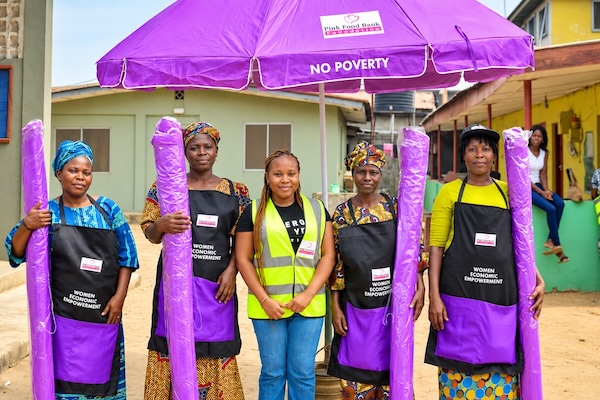
An emergency food box can ease a household’s immediate pressure. Restocking a small business addresses a different problem: the income needed to buy the next week’s food. Pink Food Bank Foundation has built its work around the relationship between those two needs, combining hunger relief with support intended to strengthen families’ ability to provide for themselves.
The Lagos-based organisation works with low-income households, widows, children, young women and smallholder farmers. Its approach brings food distribution into the same programme portfolio as nutrition education, school support and economic empowerment. The purpose is practical: help families meet an urgent need while creating opportunities that may make repeated emergencies less likely.
Hunger relief with a longer horizon
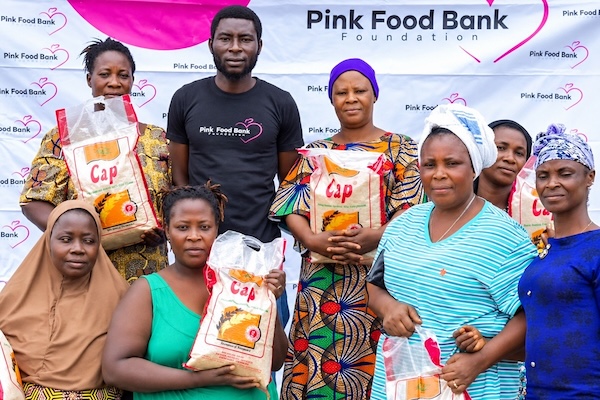
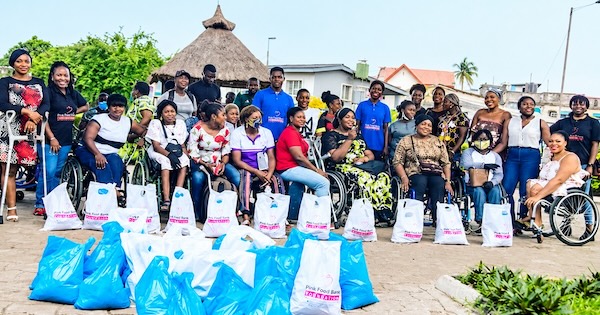
Rising food prices sharpened the foundation’s response in 2021. Through Wonder Box, it offered free food boxes to low-income households, retirees and widows in Lagos. The intervention addressed a pressure that could not wait for a longer development programme to take effect.
Food assistance remains central to its work. Alongside distribution, the foundation runs nutrition sessions focused on food that households can realistically afford and prepare. That emphasis makes affordability part of the discussion about eating well, rather than assuming that families have the resources to follow an ideal diet.
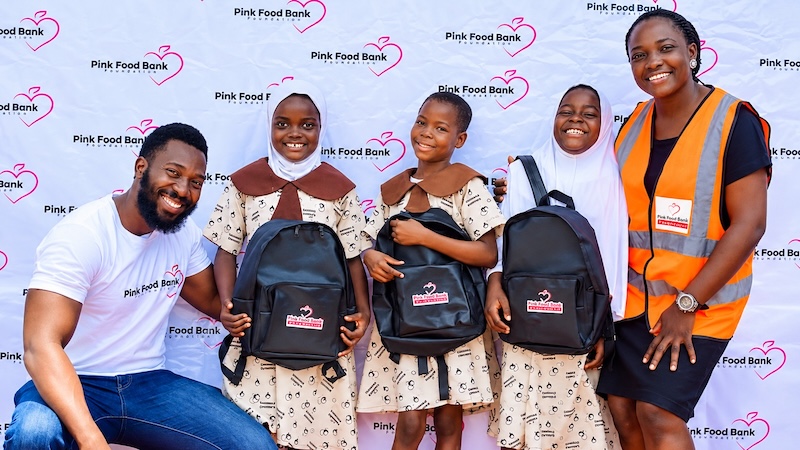
School feeding and the distribution of school supplies extend the approach to children. These activities address different aspects of daily life, from meals to the materials needed for school. Together, they reflect the organisation’s view that food security, health and education belong within the same household conversation.
Giving households a choice
A food intervention in Liverpool illustrates a distinct decision about delivery. On the twenty-third of November 2025, Pink Food Bank Foundation worked with TLC at All Saints Liverpool, offering spaghetti, bread, cereals, tinned fish and snacks through a free-selection format.
Households could choose items suited to their circumstances instead of receiving a fixed package. The difference was in who made the decision. Rather than treating every household’s needs as interchangeable, the format left room for recipients’ own judgement.
This principle also informs the foundation’s use of feedback after programmes. Listening to recipients can help an organisation understand whether its assistance fits the circumstances in which people will use it. Choice does not create more food or remove funding constraints, but it can influence how useful the available support becomes.
Connecting skills with working capital
The foundation’s Cash for Widows initiative began in 2023. In September that year, fifty widows received cash support intended to strengthen their businesses. The decision connected hunger relief with the trading activity through which a household might pay for food over time.
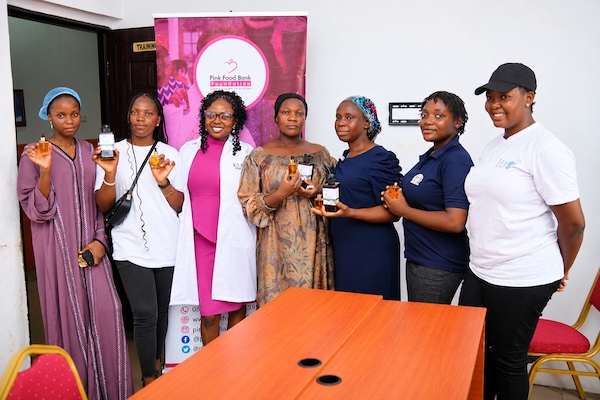
Its work with girls follows a related logic. On the fourteenth of November 2025, a programme delivered with The IDIA Project in Lagos brought together coding, graphic design and skincare formulation training. Fifty girls completed the programme, which paired learning with start-up support.
The combination addresses two different barriers: access to practical skills and the resources needed to begin using them. Completion marks a concrete stage in that process. Sustained earnings, business survival and household stability are longer-term measures of what such an intervention can achieve.

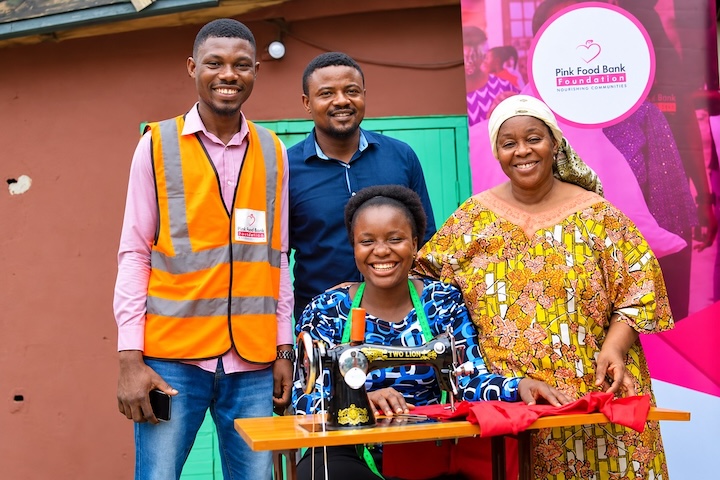
The foundation’s wider economic empowerment work also includes sewing skills. Across these activities, the important connection is between what participants learn and the opportunities available to put that learning to work. A course can open a route towards income; continued opportunity determines where that route leads.
The challenge of sustaining support
Pink Food Bank Foundation identifies a persistent operational pressure: demand for assistance can grow faster than the resources available. Its response includes corporate partnerships, individual giving, grants, in-kind contributions and collaboration with other non-governmental organisations.
A varied funding base can help sustain a portfolio that includes both immediate relief and longer-term support. It also creates a need to keep the purpose of each programme clear. Food distribution, training and business assistance deliver different forms of support and require different measures of progress.
The foundation is developing a results framework for its programmes. That offers an opportunity to connect records of delivery with a clearer understanding of what changes afterwards: whether a business continues trading, whether a skill becomes a source of income and whether families can maintain access to food.
For Pink Food Bank Foundation, the next stage of the work rests in that connection. The food a household receives today matters immediately. The ability to provide for itself over the following months is the longer horizon towards which its broader approach is directed.