

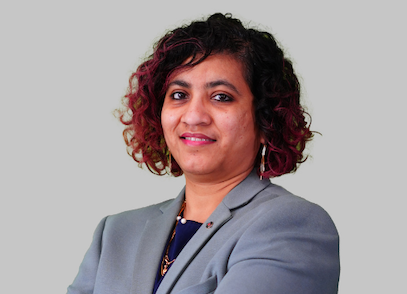
Some employees disagreed with a policy and still committed to helping put it into practice. For Leena Lopez, that response mattered. Participation had made room for dissent without bringing shared responsibility to a halt. People could challenge a decision, remain part of the conversation and support the work that followed.
That is the kind of workplace culture Lopez has sought to build at Knowcraft Analytics Private Limited, where she is Senior Vice President, Strategy and HR. Based in India, she works at the intersection of business strategy and the daily experience of employees. Her emphasis is on the conversations through which people learn whether their views carry weight.
Knowcraft provides offshore accounting, audit, investment banking, taxation, transaction advisory and valuation services to firms in the United States and Canada. Within that professional setting, Lopez has focused on strengthening the relationships that allow people to contribute beyond their immediate assignments.
The distance behind the deliverables
The challenge became clearer after the pandemic changed working arrangements. Hybrid and home working offered flexibility, but Lopez noticed a weakening sense of belonging. New colleagues found it difficult to form relationships. Experienced employees were sometimes reluctant to question established ways of working or raise concerns.
Work continued, yet she saw employees becoming less connected to one another and to the organisation’s wider purpose. The concern extended beyond whether tasks were being completed. A team could meet its responsibilities while leaving useful ideas unspoken and difficult conversations untouched.
Her first response was to listen across levels. Those conversations brought attention to the gap between delivering work and feeling able to influence how it was done. Rather than starting with an additional set of policies, she concentrated on making open dialogue a more ordinary part of working life.
“My concern was not what people were saying. My concern was what people were not saying.”
Leena Lopez
Putting managers at the centre
Managers became central to the approach because they shaped the interactions employees encountered most often. Lopez encouraged a shift towards coaching, with conversations that considered challenges, aspirations and development needs alongside deliverables. The aim was to give managers a broader understanding of the people doing the work.
That required room for differing viewpoints. Curiosity, openness and respect were practical expectations for discussion: a colleague needed to be able to question an idea without the conversation immediately becoming a defence of authority. For a new employee, the same openness could make an early contribution easier.
Lopez describes employees becoming more willing to offer ideas in meetings, including ideas that challenged familiar thinking. She also saw managers spending more time coaching and colleagues becoming more comfortable seeking support beyond their own departments. These were changes in everyday interaction, close to the places where trust was either strengthened or weakened.
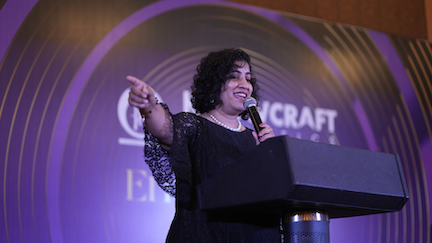
Participation without unanimous agreement
Employee involvement in policy decisions gave the approach a concrete form. Colleagues were invited to make suggestions and work towards agreement before policies were rolled out. Lopez wanted people to have a part in shaping the expectations they would later be asked to follow.
The willingness of some employees to support implementation despite continuing disagreement was particularly significant to her. Agreement on every point had not been necessary for commitment. What mattered was that colleagues had been able to speak, listen and remain involved in the decision.
This connects employee voice to accountability. In Lopez’s approach, participation is more than an opportunity to express a preference. It also gives people a role in carrying a decision into everyday practice. Managers still have to guide the work, while employees have space to influence it and take responsibility for their contribution.
Reading the conversations alongside the data
A time-tracking tool used within hybrid and home-working arrangements brought another dimension to the work. Lopez used it to look for signs of workload strain and low productivity as policies were being developed to address those concerns. Alongside the tool, she paid attention to how openly employees discussed their experiences.
The conversations mattered because a record of time could not by itself explain the experience behind it. Lopez looked for a willingness to raise concerns and participate in the response. Those exchanges helped her judge whether people felt able to speak and whether they were ready to support decisions that affected their work.
Making setbacks discussable
Another change she valued concerned mistakes. Lopez describes a gradual move away from treating setbacks as individual failures towards discussing what teams could learn together. Difficult conversations became opportunities to examine the work and consider improvements.
That shift gives her cultural ambition a specific test. It is relatively easy to encourage openness when a discussion is comfortable. A setback tests whether colleagues can stay candid when the subject is a decision that went wrong. Her emphasis is on keeping learning possible in those moments.
The same expectation runs through her account of collaboration: people asking for support, managers making time to coach and newer colleagues contributing earlier. Each depends on relationships in which an employee can acknowledge a need or offer a different view without withdrawing from the team.
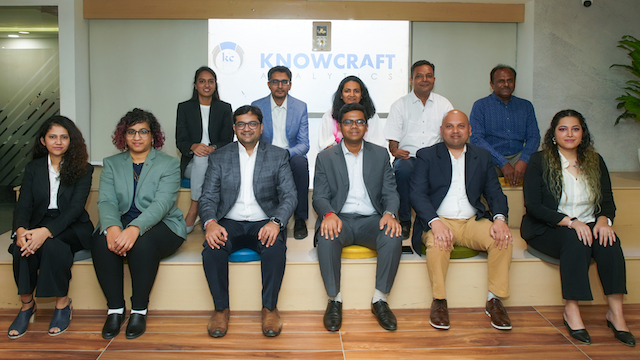
A culture that can sustain itself
Lopez is a GreenSignature® Global Impact Honours 2026 honouree for Building strong workplace culture. The recognition sits alongside an ambition that extends beyond any single policy or initiative: a workplace where people continue to challenge constructively, collaborate and support one another’s progress.
Her measure of lasting change is whether those behaviours endure. The policy may be revised, the working arrangement may change and a manager may move on. The more demanding legacy is a team that keeps making space for an honest contribution, including from someone who disagrees.