

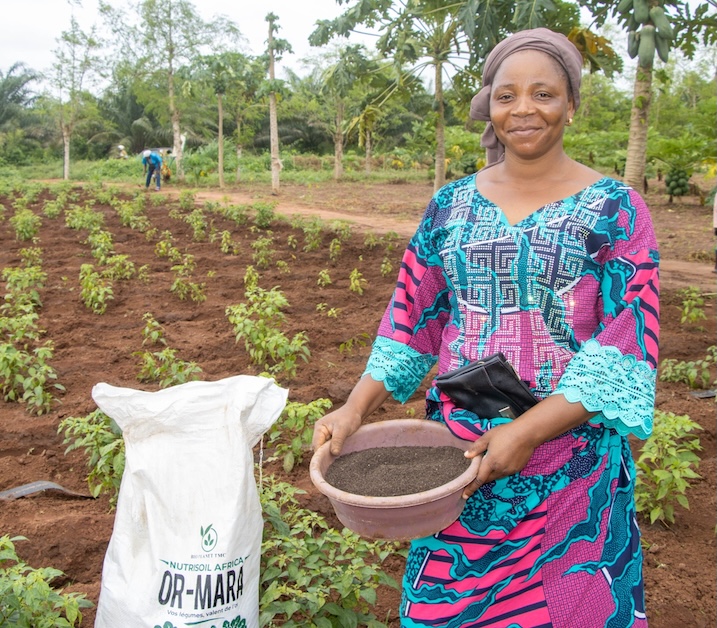
For BIO PLANET TMC Ltd, producing organic fertiliser is one part of a larger task. The other is helping farmers decide how to use it: which formulation suits a crop, how much to apply and when an application is most useful. Its approach to organic fertiliser in Benin connects the production site with the field, pairing recycled biodegradable material with soil diagnostics, demonstrations and continuing technical support.
That connection gives the enterprise its distinctive focus. Agricultural waste becomes a production resource, while farmers’ experience helps shape both the product and the advice accompanying it. The intention is to build a service around soil fertility, with practical relevance to the households whose livelihoods depend on it.
The need is substantial. The United Nations Convention to Combat Desertification’s country dashboard records more than four million hectares of degraded land in Benin in 2019, representing more than a third of the country’s total land area. Behind that national measure lies a practical challenge for agriculture: maintaining productive land while protecting the resources future harvests require.
Bringing organic material back into use
Founded in 2022, BIO PLANET TMC developed from an observation about rural farming communities: biodegradable material was being discarded or burned while farmers faced declining soil fertility. The enterprise began experimenting with ways to turn that material into usable agricultural inputs.
Its work now connects livestock farms, agricultural cooperatives and local communities with fertiliser production. Biodegradable waste is collected and processed into organic formulations adapted to different crops. This creates a connection between waste management and agricultural supply, rather than treating them as separate activities.
The Resolution Project’s profile of the venture describes its work supplying granulated organic fertiliser to farmers in Pobè and beyond, alongside training for rural women in organic farming and environmental practices. That combination places access to knowledge alongside access to a physical product.
Organic fertiliser in Benin, guided by field conditions
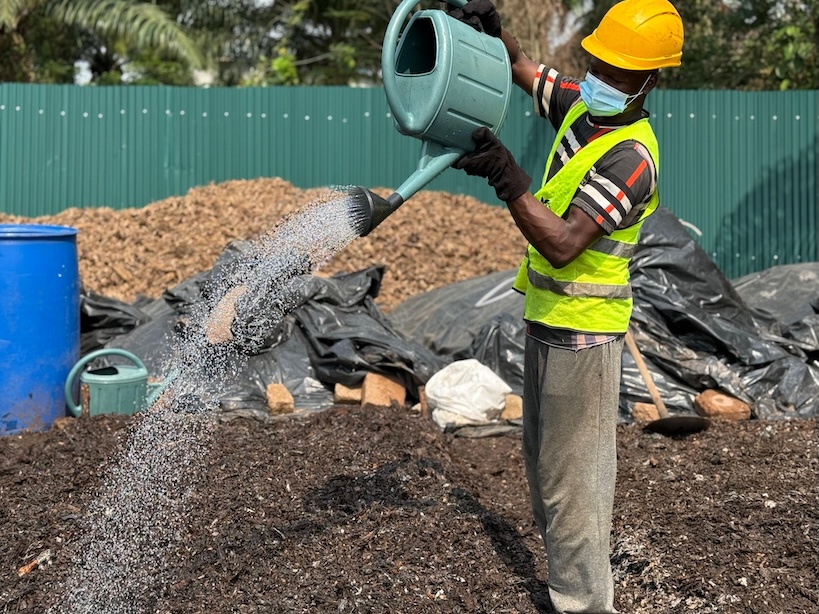
BIO PLANET TMC has developed its production approach beyond conventional composting. Sensors monitor conditions during decomposition, including temperature, moisture, acidity and oxygen. The purpose is to help the team recognise changes in the process and make adjustments as organic material matures.
A second layer of technology operates in farmers’ fields. Digital soil diagnostics assess soil conditions and inform recommendations suited to particular crops and locations. The enterprise describes using these tools to understand nutrient conditions and other indicators relevant to cultivation.
The practical connection between these stages matters. Production controls address how fertiliser is made; field diagnostics address where and how it will be used. Together, they give the team a basis for adapting advice rather than offering the same recommendation everywhere.
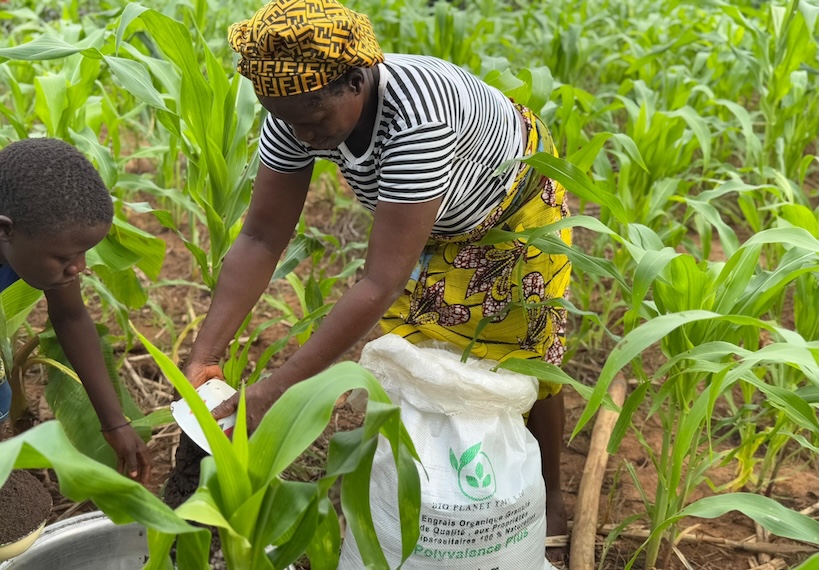
Among the farming activities described in its work are oil palm and vegetable cultivation. Support covers application doses, timing and crop management, followed by visits that allow the team to discuss farmers’ observations.
This continuing contact creates opportunities to identify difficulties that a single delivery or training session might miss. It also makes the service responsive to the conditions in which farmers actually work.
Farmers as contributors to development
Farmer participation is central to how BIO PLANET TMC refines its approach. Field visits, demonstrations and regular exchanges bring practical observations into decisions about formulations and application guidance.
Farmers contribute knowledge of local soils, seasonal changes and crop behaviour. Their experience can help explain why an approach is straightforward to use in one setting but difficult to adopt in another. For an enterprise seeking wider uptake, that information has operational value.
Women, smallholder farmers and young people are priorities within its mission. Its wider approach links agricultural knowledge with participation and economic opportunity, recognising that access to an input alone does not settle the question of who can benefit from it. The company places training, soil assessment and technical assistance within that same model.
The resulting relationship is participatory: technical measurements inform recommendations, while farmers’ experience helps refine their application. Maintaining that exchange will become increasingly important as the enterprise seeks to reach more communities.
Growth brings an operational test
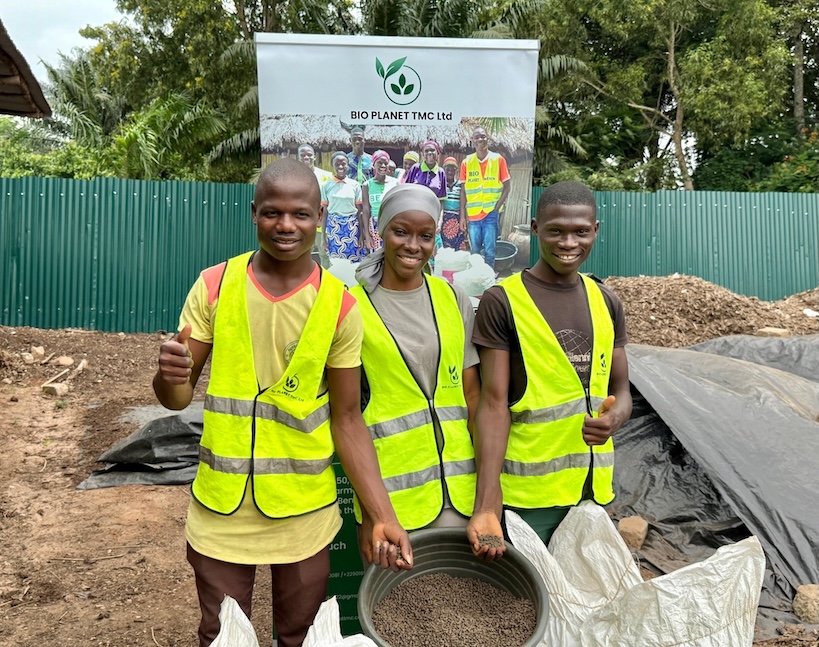
BIO PLANET TMC identifies limited production capacity and financial resources as constraints on its next stage. Increasing output requires equipment, quality assurance and distribution arrangements, alongside the field support that distinguishes its approach.
These needs are connected. More production creates additional material to distribute; a wider distribution network creates more demand for practical guidance. Keeping fertiliser affordable while financing those activities is a central business challenge.
The enterprise’s stated priorities include expanding facilities, strengthening quality assurance and product certification, and extending soil diagnostics and georeferenced farm mapping. It also intends to develop distribution partnerships across Benin and, over time, West Africa.
Its proposed measures of progress extend from waste recycled and fertiliser distributed to farmers reached, production costs, yields and net farming income. That distinction is useful: greater output records business activity, while changes in farm performance help establish what that activity means for rural livelihoods.
BIO PLANET TMC’s next chapter will depend on keeping those measures connected. Its contribution rests on a chain of practical decisions—from recovering organic material to supporting its use in a particular field. Sustaining that connection as the business grows is the work ahead.