

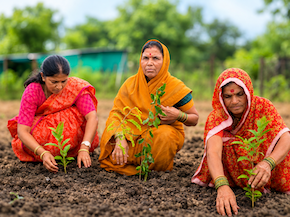
Near Waghalgaon village, establishing a native plantation meant confronting hard black-cotton soil, monsoon damage and a summer water shortage. Planting was only the beginning. Keeping young trees alive required a solar pump, a borewell, water storage and help from a neighbouring farmer.
For Samvedna Development Society, those practical decisions illustrate the continuing work behind environmental programmes. A plantation needs dependable irrigation. Waste segregation needs a collection service that supports it. Community participation needs relationships that survive beyond a campaign.
The organisation brings these concerns together through ecological restoration and urban sanitation programmes. Across both, its approach centres on the systems and local involvement needed to sustain an intervention.
Samvedna Development Society’s community-first approach
Founded in two thousand eleven, Samvedna Development Society works across several development sectors, including environmental rejuvenation, education, skills and agriculture. Its stated approach connects local assessment with programme design, implementation and continuing support.
Its environmental work follows that same logic. Degraded land and poorly managed waste present different technical challenges, but both require attention to the people who will maintain a site, use a service or carry a new practice into everyday life.
That places community engagement within the delivery of a programme. Residents, schools, sanitation workers and local institutions each have a practical role. The task is to make those roles workable over time.
Keeping a plantation alive
Under the HG Green Drive, Samvedna has used the Miyawaki method to establish closely planted native trees on degraded land. Near Waghalgaon, the work involved more than twenty-five thousand saplings spanning thirty-seven native species.
The conditions tested the project. Hard soil complicated digging, while monsoon damage affected thousands of young plants. Summer brought a further threat when water became scarce.
The response combined infrastructure with local cooperation. A solar pump, a new borewell and a storage pit supported irrigation. During the driest weeks, water shared by a neighbouring farmer helped maintain the supply.
These details matter because planting totals describe an activity, while the continuing condition of the trees determines what that activity becomes. At Waghalgaon, maintaining water access became central to the effort to establish lasting green cover.
A separate plantation programme in Khandwa, Madhya Pradesh, connects tree care with farming livelihoods. Through an IRCTC corporate social responsibility partnership, Samvedna planted twelve thousand Malihabadi mango saplings across three villages. The programme pairs planting with the prospect of future fruit income for the families maintaining the trees.
That income remains a longer-term objective. The immediate work is establishing and caring for the saplings so that the intended benefits have a chance to develop.
Making segregation part of a dependable service
In urban sanitation, the same concern with continuity appears in another form.
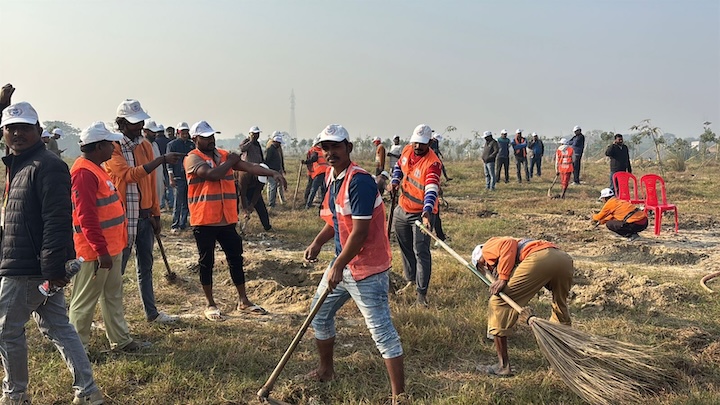
In Mokama, Bihar, Samvedna’s work includes daily door-to-door waste collection, GPS-tracked transport and wet and dry waste segregation. The operational challenge extends beyond putting vehicles on a route. Narrow lanes can become difficult to access during the monsoon, while staff turnover can interrupt service.
Standby vehicles, repeated household visits and regular liaison with municipal officials form part of the organisation’s response. These arrangements address the practical conditions under which residents are being asked to change their habits.
Separating waste at home is easier to sustain when collection is dependable and instructions remain consistent. Outreach and service delivery therefore need to reinforce each other. A household visit explains the practice; the collection system must make following it worthwhile.
Bringing the work into neighbourhoods and schools
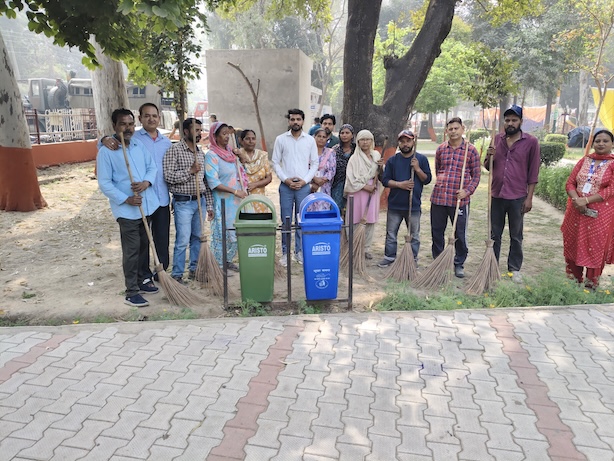
In Gorakhpur and Jalandhar, Samvedna’s sanitation engagement includes household counselling, school activities, residents’ welfare association involvement and composting promotion. Its public communications also describe source-segregation and home-composting sessions in Jalandhar, alongside a partnership with the Cantonment Board covering sanitation and community engagement.
The purpose of repeated contact is to move participation beyond attendance at an event.
In Gorakhpur, residents’ welfare association leaders have taken on neighbourhood mobilisation roles. In Jalandhar, students who initially joined campaign activities have gone on to organise cleanliness drives themselves.
Those developments give local participation a more durable form. A resident who helps neighbours maintain a practice, or a student who organises an activity, contributes something different from a campaign audience. Responsibility begins to spread through existing community relationships.
Working within a wider civic effort
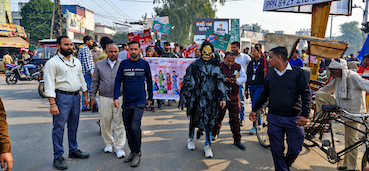
Samvedna’s work in Agra combines sanitation outreach with a separate tree-planting initiative undertaken with Bank of Baroda.
The distinction between an organisation’s contribution and a city’s wider progress is important. Municipal authorities, sanitation workers, residents, businesses and other partners all influence environmental conditions. Samvedna’s activities sit within that broader effort.
Its experience across projects also reveals recurring operational pressures. Water supplies fail. Seasonal access changes. Households need further explanation. Teams change, and relationships have to be maintained.
Responding to those pressures requires time and provision for setbacks. Backup water sources, alternative vehicles and continuing local coordination are part of the work itself.
Designing for the next season
Samvedna’s next priorities include deeper composting adoption, wider use of GPS-monitored collection and stronger ward-level engagement that can continue beyond individual contracts. At Waghalgaon, the ambition is for the plantation to mature towards greater ecological independence.
These aims set a demanding measure of progress. A collection route must remain useful through difficult weather. Segregation must continue after repeated visits become less frequent. Young trees must survive successive seasons.
Across Samvedna’s environmental programmes, that is the central task: building the everyday arrangements through which an intervention can become a lasting local practice.