

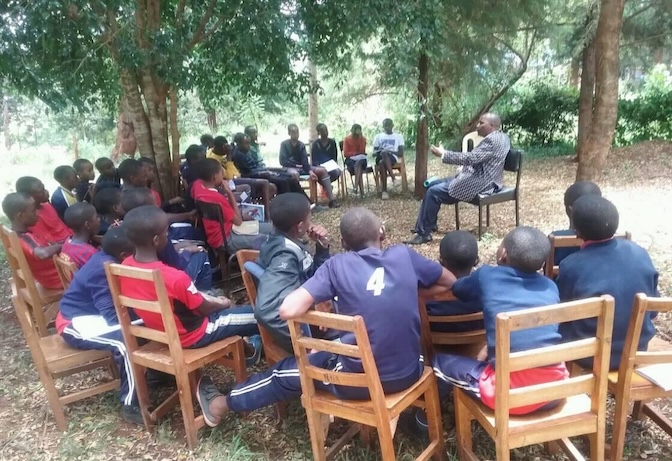
For Hope Mentorship Initiative, a school meeting is one place to start improving the support a child receives. The community-based organisation in Kangema Sub-County, Murang’a County, encourages fathers and male guardians to attend, speak with teachers and stay involved in their children’s education. The invitation is part of a wider effort to make the relationship between home and school work better for learners.
Three people in the mentorship model
The initiative calls its approach Triple M, from the Kiswahili Mwalimu, Mwanafunzi na Mzazi, meaning teacher, learner and parent. It grew out of a practical concern. A teacher may notice a change in a pupil’s participation, while a parent understands pressures at home and the pupil has their own account of what is happening. Bringing those perspectives together can help adults recognise when a child needs academic or emotional support and agree on how to respond.
The learner has a role in shaping that response. The initiative consults pupils, teachers and parents about their priorities and uses their feedback to adapt its mentorship activities. Its work includes sessions for Form Four candidates and seminars for school leavers, alongside meetings for adults. Kenya’s Institute of Curriculum Development also treats parental engagement as a shared responsibility between schools and families in its basic education framework.
Giving fathers a way to take part
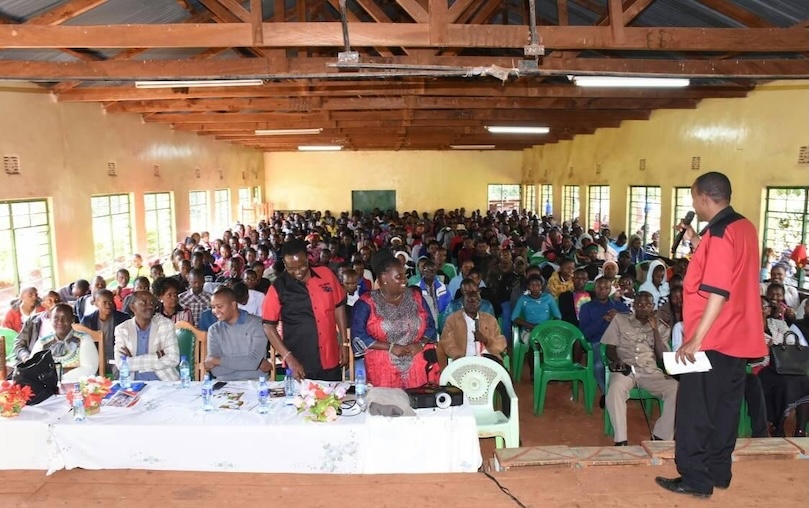
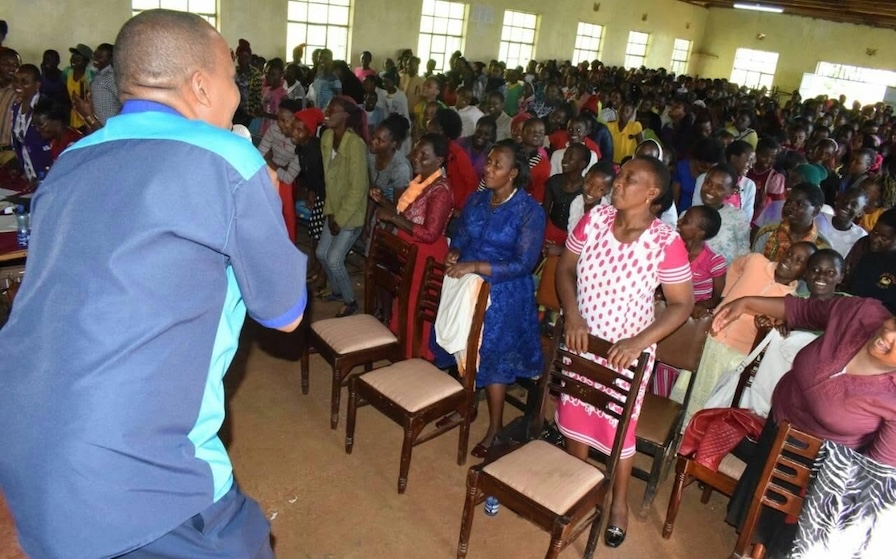
Hope Mentorship Initiative identified fathers’ limited participation in school meetings as a gap it could address directly. It organised a seminar for parents in Murang’a County and urged fathers and male guardians to take a more active part in school meetings, communicate with teachers and support their children’s development at home. The seminar gave the initiative a way to make those expectations explicit. Its wider aim is for that contact to continue from one school meeting to the next.
Supporting families beyond school
The initiative has also promoted highland arrowroot farming among women facing economic hardship, with the aim of improving household food security and supporting livelihoods. Involving participants in shaping agricultural activities follows the same practice the initiative uses in mentorship. People involved in the work help identify priorities and shape how it is carried out.
As Hope Mentorship Initiative looks to reach more schools and communities in Murang’a County, it plans to track parental participation and learner engagement. Those measures can help it understand whether families stay involved and whether pupils take a more active part. A parent seminar can begin the conversation. The day-to-day work of Triple M is keeping it going between the child, the home and the school.